
As Taxes Fade Away, Stablecoin Adoption Continues to Rise in Brazil

The adoption of stablecoins in Brazil continues to grow, now reaching beyond the cryptocurrency sector. The main point behind this rise in adoption across several industries is that stablecoin payments are tax-free, while fiat exchanges are taxed.
Key Takeaways:
- After hitting $6B in December, Bloquo notes stablecoins expedite B2B settlements to benefit from tax exemptions.
- Facing backlash, President Lula delayed a 3.5% stablecoin tax, shielding future crypto market adoption next.
- Rising inflation hurts Lula’s 4th term bid against Flavio Bolsonaro, threatening future crypto policies next.
Protected From Taxation, Stablecoin Use Cases Keep Growing in Brazil
Stablecoin adoption continues to advance in Brazil, where companies not directly linked to the crypto niche are also implementing use cases that include these dollar-pegged payment elements.
According to Carlos Russo, CEO of blockchain infrastructure provider Bloquo, stablecoins have risen as an effective way of expediting B2B settlements. Talking to Valor Economico, he stated:
“The market today is super healthy. Companies like ours operate mainly in B2B. We serve banks, brokerages, and other companies that want to exchange currency for stablecoins.”
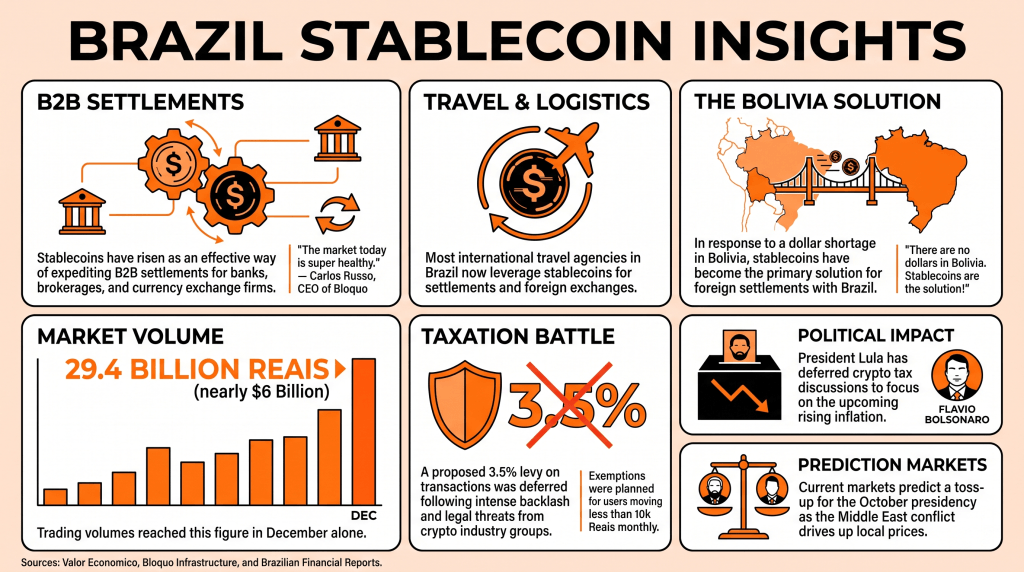
Russo highlighted that most international travel agencies in Brazil now leverage stablecoins. Also, the executive mentioned foreign settlements with Bolivia as another use case for stablecoins. “There are no dollars in Bolivia. Stablecoins have become the solution,” he stressed.
Stablecoins, which have reached trading volumes of over 29.4 billion reais (nearly $6 billion) during December, have an advantage over standard fiat transactions. While the latter have to pay a financial transaction tax, stablecoins can be transacted freely.
While the Brazilian government was prepared to tax stablecoin transactions, the move faced strong backlash from cryptocurrency industry groups, who even vowed to sue the government. The measure would encompass a 3.5% levy on all stablecoin movements, including exemptions for users who don’t move over 10,000 Brazilian reais (nearly $1,910) monthly.
As the initiative also faced rejection from some lawmakers, reports indicate that President Luiz Inácio Lula da Silva deferred this discussion to a hypothetical upcoming fourth term, as his party switched into election mode.
While Lula was leading the polls earlier this year, he is facing a slump in polls as Brazil starts feeling the heat of inflation and higher prices after the escalation of the Middle East conflict. Prediction markets anticipate a toss-up between him and Flavio Bolsonaro, son of former President Jair Bolsonaro, for the October elections.
Related Articles
US Lawmakers Urged to Advance CLARITY Act as Digital Chamber Pushes Senate Markup
U.S. crypto legislation faces rising pressure as Senate leaders are urged to move market structure rules forward. The Digital Chamber argued further delay could...

Crypto Founder Explains Why ‘Altcoin Season’ May Not Return the Way It Used To
The crypto sector faces a structural crisis after six years of decline, where $4 trillion valuations hid a lack of actual incoming capital. Projects...

Solana DeFi Tests Liquidity Depth as USDC Borrow Rates Surge
The Solana ecosystem suffers a liquidity crisis after the security breach at KelpDAO on April 20, draining $USDC reserves. Leading protocols such as Jupiter...

Bitcoin reclaims $75,000 as Iran ceasefire talks advance, equities rally resumes
Bitcoin is back above $75,000, as markets price another diplomatic off-ramp. The cryptocurrency was up 1.5% over 24 hours and 1.7% on the week,...