Korea’s New Rule for Crypto Exchanges

South Korea’s financial regulator has ordered all crypto exchanges to verify user asset balances every five minutes, following a massive overpayment incident that shook market confidence earlier this year.
One botched reward payout exposed systemic cracks across the entire industry.
What Triggered the Rules
In February, Bithumb accidentally sent 2,000 BTC per person instead of 2,000 Korean won ($1.40) during a promotional event. The error amounted to roughly $42 billion in misallocated crypto. The Financial Services Commission (FSC) launched emergency inspections across all five major Korean exchanges immediately after. What they found went far beyond a single human mistake.
Most exchanges were only reconciling their books once every 24 hours. Three had no automatic kill switch to halt trading when discrepancies appeared. Four lacked multi-step approval systems for high-risk manual transactions. Two exchanges hadn’t even separated their general accounts from high-risk transaction accounts — a basic safeguard.
What Exchanges Must Now Do
The FSC announced a three-pillar reform package on April 6. Exchanges must run automated balance checks every five minutes, with alerts and automatic trading halts triggered by major mismatches. Monthly external audits replace the previous quarterly schedule, and public disclosures must now include asset-by-asset blockchain holdings rather than a simple coverage ratio.
For manual, high-risk transactions such as event payouts, exchanges must use separate accounts, deploy validity-check systems that automatically reject mismatched inputs, and require cross-verification by a third party before execution.
The FSC will also require exchanges to appoint dedicated risk management officers and establish risk management committees — standards already expected of traditional financial firms. Compliance checks move from annual to twice-yearly, with results reported to regulators.
DAXA, the industry body, will complete self-regulatory amendments this month, with systems built out by May. Key provisions will feed into Korea’s forthcoming second-phase Digital Asset Act.
Related Articles
Crypto RWA Perpetuals Challenge TradFi Market Share
Crypto-native perpetual markets tied to real-world assets ( RWA) are rapidly gaining traction against traditional futures. New data shows sharp growth in trading volumes...
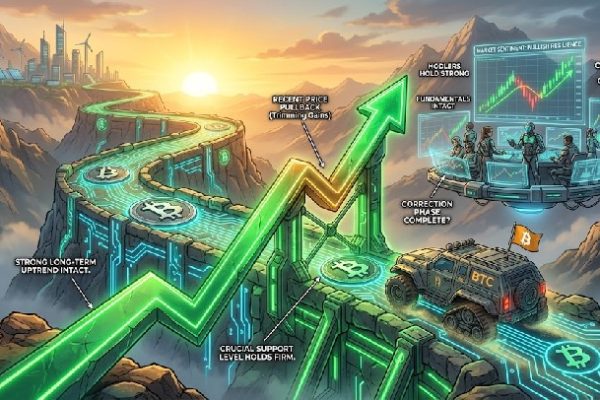
Bitcoin Price Trims Gains, But Uptrend Still Holds Strong
Bitcoin price started a strong increase above the $70,500 zone. $BTC is consolidating gains and might aim for more gains above the $71,650 zone....

Cardano price tests $0.25 support as long liquidations mount, will it crash?
Cardano price fell over 5% towards $0.25 on Thursday, paring off a part of its gains seen on the previous day. According to data...

TitanRWA Taps GoldFinger to Broaden Gold-Driven RWA Tokenization
TitanRWA, a blockchain-based RWA tokenization platform, has partnered with GoldFinger, a blockchain entity for gold’s tokenization into digital assets. The partnership aims to connect...